


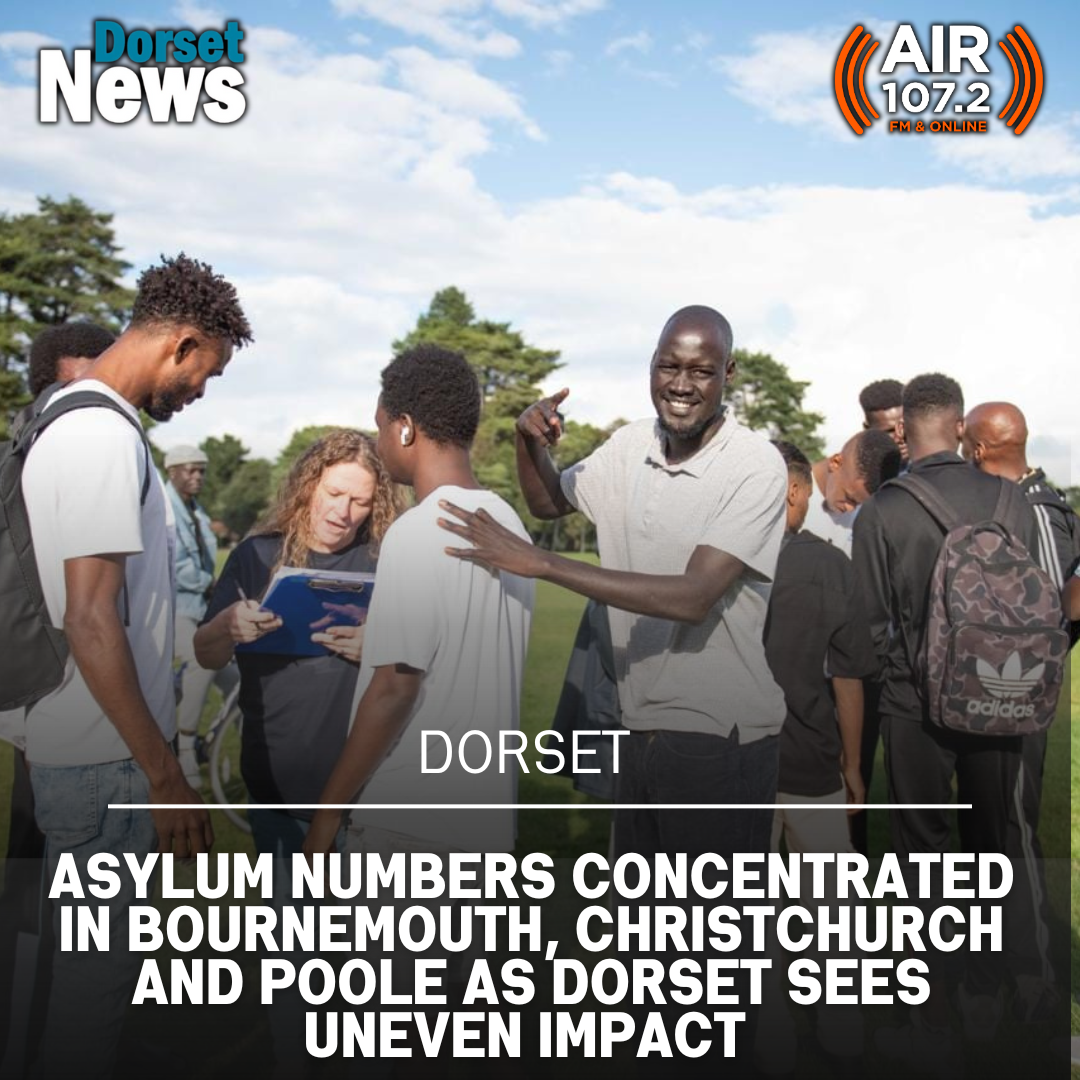

New Home Office figures show that the vast majority of asylum seekers supported in Dorset are concentrated in the Bournemouth, Christchurch and Poole (BCP) area, raising fresh questions about fairness, transparency and the long-term sustainability of the government’s asylum accommodation policy.
According to the latest Home Office immigration support data, 618 asylum seekers were receiving government support in BCP at the end of September 2025. By contrast, just two individuals were recorded in the wider Dorset Council area, both receiving financial support only rather than accommodation.
The figures highlight a stark imbalance within the county, with one urban authority carrying almost the entire local burden while surrounding areas host virtually none.

The data also shows that the overwhelming majority of supported asylum seekers in BCP — more than 90 per cent — are housed in “contingency accommodation”, primarily hotels. This category was originally intended as a short-term emergency measure but has become a semi-permanent feature of the asylum system.
Hotel use has drawn repeated criticism from MPs, councils and residents, both for its high cost to the taxpayer and its impact on local services, tourism and community cohesion.
Despite repeated ministerial pledges to end the widespread use of hotels, the figures suggest that reliance on them in parts of Dorset remains firmly entrenched.
Crucially, local authorities have no power to approve or reject asylum accommodation placements, which are made by the Home Office and its private contractors. Councils are often informed only shortly before placements occur and are left managing knock-on effects for housing, policing, health services and community relations.
BCP Council has previously stated that it is under significant strain as a result of asylum accommodation decisions taken centrally, with limited consultation and little opportunity for local democratic oversight.
Dorset Council, covering the largely rural remainder of the county, has so far avoided large-scale placements — a disparity that some residents and councillors say is difficult to justify.
Discover more from Dorset News
Subscribe to get the latest posts sent to your email.







Leave a Reply