


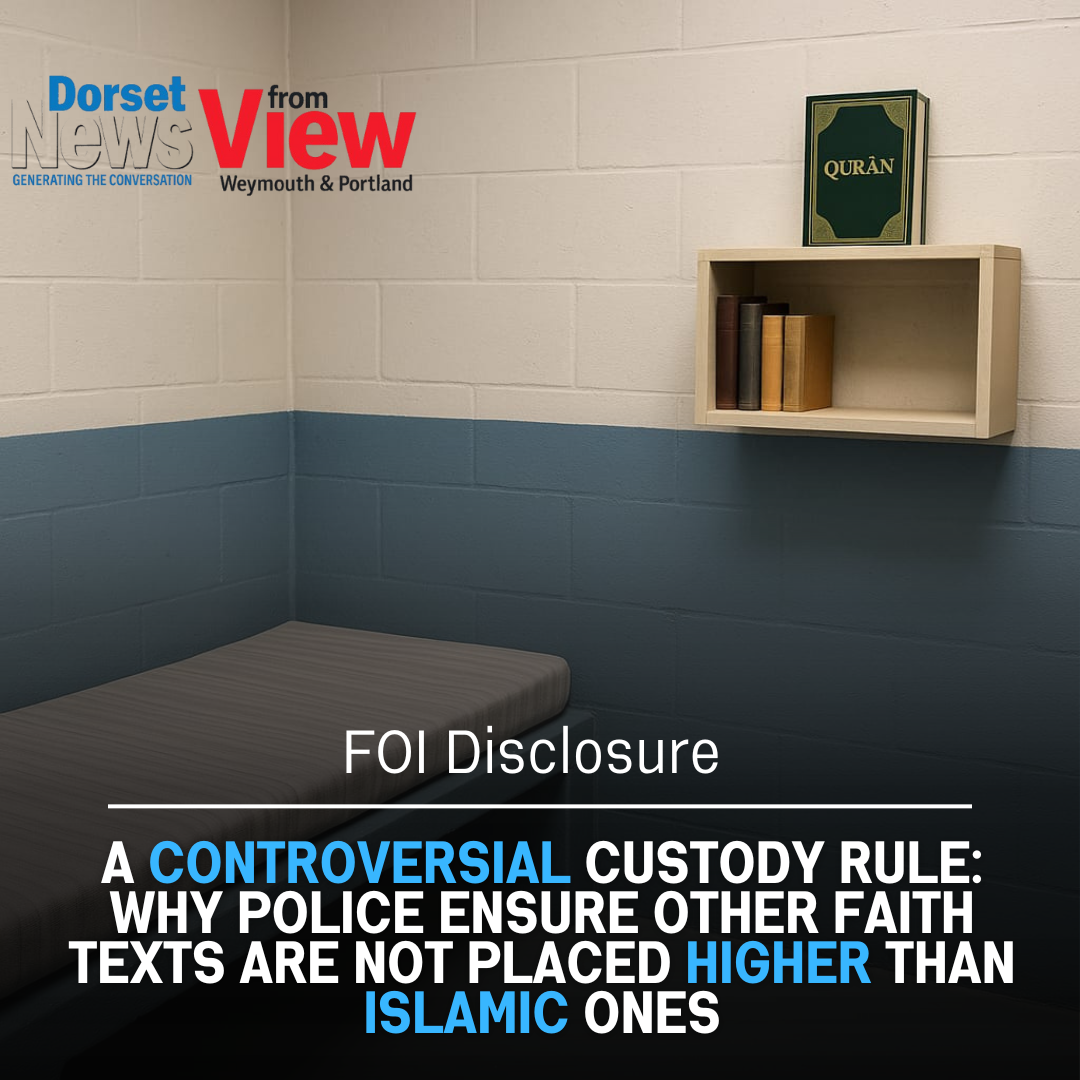
Few custody policies provoke as much quiet controversy as the instruction that texts of other faiths are not positioned any higher than Islamic ones. While officially framed as a measure of respect and conflict prevention, critics argue that the rule raises uncomfortable questions about equality, neutrality, and preferential treatment within police custody.
A Rule Designed to Avoid Offence — or Invite Debate?
Police guidance states that controversy can be avoided if religious texts are stored in a way that ensures no other faith’s text is placed above the Quran. The intention is clear: prevent religious offence, reduce complaints, and maintain calm in custody suites.
However, the very existence of this rule has become controversial. Detractors argue that physical positioning based on one religion’s doctrinal requirements risks undermining the principle that the state and, by extension, the police should remain strictly neutral on matters of faith.
To some, the message appears simple and pragmatic. To others, it appears symbolic, suggesting a hierarchy of religious sensitivity enforced by public authorities.
Equality Versus Accommodation
Supporters of the policy argue that it is not about favouritism but accommodation. Islamic teaching places strong emphasis on the treatment and placement of the Quran, and ignoring this reality would almost certainly lead to offence, complaints, or unrest in custody.
Critics counter that every faith has sacred texts, and that prioritising the storage position of one religion risks marginalising others. They ask a blunt question:
If all religions are equal under the law, why is one given special spatial consideration?
The instruction that texts of other faiths must not be positioned any higher than Islamic ones is seen by some as crossing the line from respect into institutional preference.
Policing by Fear of Complaint?
Another controversial aspect is the motivation behind the rule. The guidance explicitly suggests that controversy can be avoided by careful positioning. This has led some observers to argue that the policy reflects defensive policing, shaped less by principle and more by fear of backlash.
In this view, the rule is not about mutual respect between faiths, but about managing risk — prioritising the avoidance of one type of complaint over broader concerns of consistency and fairness.
A Practical Rule With Symbolic Weight
Although the instruction may seem minor, the arrangement of shelf height and the storage order of religious texts is significant. In custody environments, where power dynamics are tense, the visible prioritisation of one faith’s scripture can be perceived in various ways.
For Muslim detainees, the rule may represent long-overdue recognition and respect.
For others, it may look like unequal treatment codified into policy.
This dual interpretation is what makes the rule so contentious.
Respectful Policy or Unequal Standard?
The police requirement that texts of other faiths are not positioned any higher than Islamic ones sits at the intersection of respect, religion, and state neutrality. To supporters, it is a sensible, preventative measure rooted in cultural awareness. To critics, it is a controversial concession that challenges the idea of equal treatment for all beliefs.
What is clear is that a policy designed to avoid controversy has, paradoxically, become controversial itself, highlighting how even the smallest operational decisions can ignite much larger debates about religion, equality, and the role of public institutions.
Discover more from Dorset News
Subscribe to get the latest posts sent to your email.

















Leave a Reply